
The Institute
Why we exist.
Law is the infrastructure of living together. When its implementation goes digital, the form decides whether traceability, challengeability, and equal treatment are preserved – and whether the foundations for them are available to everyone. The Law as Code Institute works with actors from academia, the public sector, and business to make sure they stay open. It advances the Law as Code approach, makes the foundations public, and brings them into use – committed to the common good.
The alternative
What happens if no one does it.
Without an open foundation, the implementation of law goes digital anyway – just differently: in closed systems that no one can compare; in dependence on individual vendors; in automation whose paths cannot be traced; or in standstill out of caution. Law loses touch with its own digital reality. These consequences are the reason the foundation has to be open and broadly supported, and the reason five principles bind us: not as a declaration, but as a way of working.
The principles
01 Ethics
Digitally executable law serves the people it decides about. Their rights and their sovereignty are the benchmark. Anyone affected by a decision can understand and challenge it.
02 Human-in-the-Loop
The decision stays with the human. They can intervene in the examination and depart from the computed result. This intervention is built into the examination path itself, as part of the structure and not as oversight after the fact.
03 Augmentation
The machine takes routine work off professionals’ hands and strengthens their work with rules. That leaves time for what calls for judgment. The rulemap shows where a decision is bound and where discretion begins.
04 Transparency
Every decision can be traced back to the norm applied, step by step, including by those affected. That keeps it open to review and challenge. Every node is anchored in the passage of text from which it is derived.
05 Openness
The RUML format is openly documented and freely usable, and so are the Norm Rulemaps of the statutes. Anyone can build on them. The specification is under a free license, and anyone working with the format needs no permission to do so.
The method
Legal practice since 2009.
Everything the Institute publishes is based on the Rulemapping method. It approaches a norm from the result, in the tradition of actio-based legal thinking that already shaped Roman law: what question does the norm answer? Does a claim exist, is a conduct punishable, is someone entitled to a benefit? From this question, the examination unfolds hierarchically – requirements, sub-requirements, exceptions, counter-exceptions – until every statutory requirement has been settled for the case.
Two basic elements are enough for this: nodes and logical operators. The reduction is deliberate – the fewer elements a notation has, the less prior knowledge it demands and the clearer it is what it represents. A node carries a single condition, a requirement, a legal consequence; six logical operators connect the nodes into the examination structure.
What emerges is not a simplification but a representation of the norm in a different form: nothing is left out, nothing is smoothed over. What stands side by side in the statutory text, because a linear text allows nothing else, enters into its substantive relationship in the rulemap – readable for everyone who works with law, and machine-executable at the same time.
The method is not an idea but practice: in use in German federal legislation since 2009 and part of the training of legislative drafters. The RUML format builds on it – and every project in the ecosystem starts with it.
Section 44(1) no. 1 BNatSchG
It is prohibited to pursue, capture, injure, or kill wild animals of specially protected species …
The people
Who stands behind the Institute.

Prof. Dr. Stephan Breidenbach
Inventor of the Rulemapping method

Dr. Tilo Wend
Architect of today’s Rulemapping
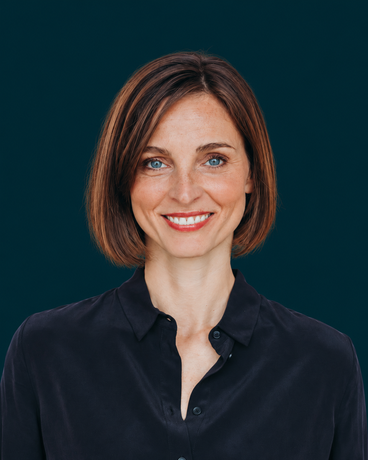
Ina Remmers
Managing Director, Law as Code Institute
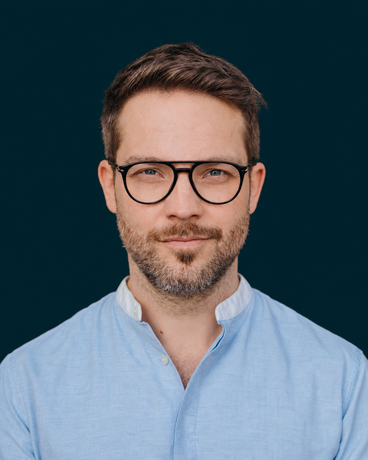
Till Behnke
Managing Director, Law as Code Institute

Stefan Rath
VP Law as Code & International
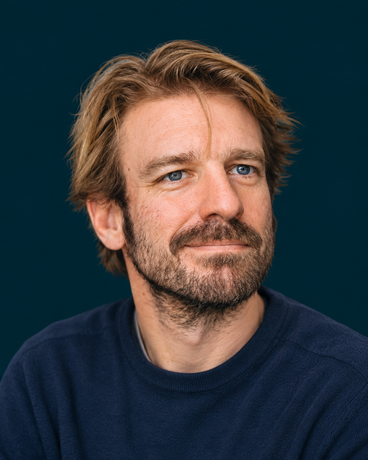
Prof. Dr. Max Senges
Director Law as Code